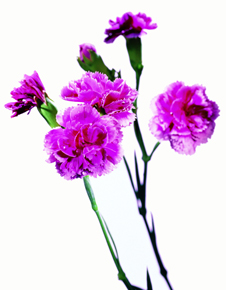
Did you know that the rose, which we regard as a symbol of love today, was first valued in ancient China for its medicinal and edible properties? Its history as a "medicine-food dual-use" plant is far older than its romantic connotations.
A Glimpse into History: From 'Golden Buddha' to 'Queen of Flowers'
Records of the rose's dietary and medicinal use date back to the Tang Dynasty. At that time, it appeared in medical texts and recipes under names like "thorn guest" and "lingering flower." Legend has it that Yang Guifei bathed regularly in rose-scented water to maintain her body's fragrance. By the Ming Dynasty, the Compendium of Food Materia Medicaclearly documented its efficacy in "benefiting the lungs and spleen, tonifying the liver and gallbladder, and warding off pathogenic energies." This flower was never merely ornamental; it was a trusted companion in the ancient wisdom of nurturing both body and mind.
Properties, Flavor, and Meridian Tropism: A Gentle Regulating Force
From the perspective of Traditional Chinese Medicine (TCM), the rose is warm in nature, with a sweet and slightly bitter flavor. It primarily enters the Liver and Spleen meridians. Its greatest strengths lie in soothing liver qi stagnation, regulating blood and menstruation, and promoting qi and blood circulation. In modern life, often filled with stress and emotional constraint, its fragrance offers a gentle way to find relief, particularly suitable for women's health and balancing qi and blood.
Seasonal Pairing: A 'Liver-Soothing' Choice for Spring
We are currently in the spring season (April 2026). TCM believes spring's energy connects with the Liver, making it a key time to soothe liver qi and regulate emotions. The lingering coolness of early spring also calls for protecting the spleen and stomach. Therefore, consuming roses in spring is most valuable for their ability to "arouse the spleen with fragrance and soothe liver qi stagnation."
Two Recommended Medicinal Recipes:
1. Rose and Red Date Tea (Basic Tonic)
-
Ingredients: 6-8 dried rose buds, 3 pitted red dates.
-
Method: Break the red dates apart and place them in a cup with the rose buds. Pour in boiling water, cover, and let steep for 5-10 minutes before drinking. Can be re-steeped.
-
Benefits: Red dates, sweet and warm, nourish the spleen and calm the spirit; rose buds soothe the liver and regulate qi. This combination harmonizes the liver and spleen, helping to alleviate spring fatigue and mood swings, with a sweet and fragrant taste.
2. Rose and Chinese Yam Congee (Strengthens Spleen and Qi)
-
Ingredients: 5g dried rose buds (ground into powder), 100g fresh Chinese yam, 50g japonica rice, a small amount of rock sugar.
-
Method: Rinse the rice. Peel and dice the Chinese yam. Cook the rice and yam together into congee. When done, stir in the rose powder and rock sugar, and simmer briefly.
-
Benefits: Chinese yam strengthens the spleen and kidneys, japonica rice supplements the middle and boosts qi, aided by the rose's fragrance to awaken the spleen and activate blood. This gentle congee helps with poor appetite and spleen weakness in spring, while also benefiting the complexion.
Important Note: Roses have mild blood-activating properties. Pregnant women and those with heavy menstrual flow should use caution. Always ensure you use food-grade, pesticide-free rose varieties, not ornamental flowers.
This flower, traversing vast stretches of time, combines romantic fragrance with tangible nourishment. This spring, why not let a cup of rose tea or a bowl of rose congee become a gentle ritual for caring for yourself?